

A critical review by ronan maat
A house bears witness to memories beyond those that line its walls. In Banyan Moon by American author Thao Thai, three generations of women reside in Banyan House – a house containing secrets sealed or spilled, and the love and grief that strengthen and sever the ties keeping the family together.
After Minh, Ann’s grandmother, passes away in the house, Ann and her mother Huong must come to terms with the devastation left in her wake. Then two other revelations hit Ann in quick, brutal succession. Firstly, she is pregnant. Secondly, the father of her child – Noah, a man whose world of wealth and privilege feels false and unwelcome to her – has been having an affair.
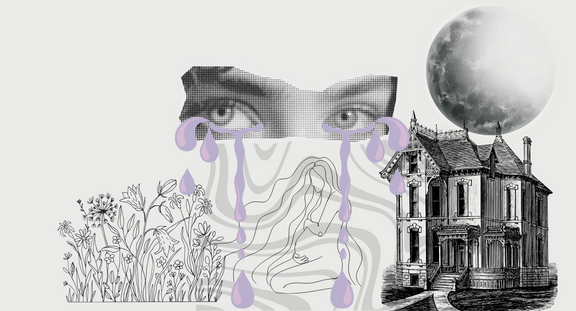
The walls of Banyan House watch as Ann and Huong try and fail to reconnect after these events bring Ann back home, with their past grievances causing their words to be suffused with bitterness and sharpness at every other attempt. Their house feels like a living being with its history coming alive in each chapter. Its gothic exterior underscores its haunting feeling, and the damage and mess, demanding but never receiving attention, holds a mirror up to the secrets and words withheld between its residents, past and present.
And in the Banyan House, we have formed our own ouroboros, snakes swallowing each other until we forget which body is ours, which soul belongs here, and which is meant to have departed.
The novel uses three perspectives – those of Ann, Huong, and Minh – in such a way that we are privy to the secrets the others are not (yet). Thai divides the story according to chapters told from the first-person perspective of the character in question, effectively creating a sense of intimacy between readers and the characters; it is as though these women are letting us in on their secrets.
It is not unheard of for authors to neglect creating a believable context for characters’ reticence, instead manufacturing secrets merely in order to build up suspense. But Thai expertly weaves the secrets into these characters’ lives in a way that makes sense for both their personalities and their individual situations. Whether a character chooses to divulge these truths is a choice made with their messy and complex humanity in mind.
Many of these secrets have seemingly died with Minh. Yet, through a unique and eerie use of the first-person perspective, Minh continues to live on in the pages and the walls of Banyan House. Much of the current timeline is told by her, watching over Huong and Ann in whatever spectral or spiritual form she has now taken, existing as a kind of disembodied voice hovering over the remaining characters. She is able to feel and respond to the conversations she witnesses, and she is burdened with the words she is no longer able to impart to the living, as well as the love that she died with for her daughter and granddaughter.
It is in this way that the grief in this novel does not feel one-sided; the grief emerges from the separation on both sides. It is also not limited to the loss of life; characters regularly mourn relationships that have changed or fractured, as well as an envisioned future that never came to be. Huong often ruminates on the loss of her daughter’s affection, as well as the jealousy of her daughter’s attachment to Minh.
Misunderstandings and withheld truths lie in the way of Huong’s relationship with her daughter, and although not all of them are resolved, we do see a satisfying conclusion to their arc. Much as many relationships between a mother and her daughter can be messy, difficult, and tumultuous, Huong and Ann’s relationship is often precarious and uncertain. Giving us insight into both their perspectives and both the hurt and love that motivate them, we occupy the same position as Minh – watching them, yet unable to prevent the train from inevitably careening off the tracks.
Thai reflects on these themes in a way that sits heavy in our chests. We follow the characters’ emotional processing and interpersonal relationships through a candid and detailed narrative, one that is emotionally affecting and hard hitting. Through all the complexities of their decisions and sacrifices, our empathy is naturally evoked.
We follow these three generations in their respective settings as Thai takes us across the world. Some of what we follow takes place in Vietnam many years ago, as Minh recounts the joys and sorrows of her early life, and the people she has met, loved, and lost over her formative years. Thai paints an evocative image of Minh’s early years. We get the sense that these are things Minh would have liked to recount to Ann, and yet as the reader we are privy to these events, some of which Minh has taken to the grave.
Her journey takes her to the U.S., and the dual setting allows the text to dive into themes of immigration and belonging, seamlessly weaving into Thai’s exploration of what it means to belong in a familial context. In a story where the concepts of family and motherhood are central, Thai asks what a house or a home can signify, and how the structure and the people in it can become so fused.
Ann often associates the idea of returning to her childhood home with regression or the perpetuation of a cycle, and moving out and into the world with achieving distance from her identity, as a personal achievement. Although she initially finds reasons to prove this attitude, the eventual forgiveness and empathy she extends to the women who came before her recontextualise the presence of this home and what it means to her.
Ultimately, Banyan Moon is a story about all the messy and very human complexities of motherhood, and the love that survives beyond resentment and anger.
‘Gratitude and resentment are two things I feel most when I think of your grandmother,’ she says.
‘What about love?’
She’s surprised. ‘Of course love. Always love.’
While cathartic is a word that could be used to describe the emotions that run high in all the grief, fear, and anger that leap off the novel’s pages, hope is the emotion that settles in you when you turn the final page. Though uncertainties abound, and problems are far from fully resolved, you are left with the sense that you, just like Minh, can finally rest easy, and that time will take its due course for the surviving characters.

ABOUT THE AUTHOR
Ronan J. Maat is an MA student in literature. With a firm belief that stories help to broaden our understanding of and compassion toward our fellow humans, he is always on the lookout for new and inspiring works and voices.

