

‘It’s not bloody easy, being human’
Masculinity and the Quiet Acts of Resistance
By Rebecca Burger
At 89-years-old, Bo has little patience for the hurried world around him, especially for his son Hans, who is ‘always running around without any real idea of where he’s going’. Living in rural Sweden with his dog, Sixten, Bo navigates the last months of his life with a mixture of stubbornness, tenderness, and quiet reflection. His wife, Fredrika, suffers from dementia and has been living in a care facility for the past three years. Given Bo’s own faltering memory and weakening body, he is visited daily by carers who help him eat, bathe, and look after both him and Sixten. This has made Hans step into roles of authority and care that Bo once held and become both the biggest help and the biggest source of conflict for his father, as he wants to take Sixten away. Their relationship exposes the shifting dynamics of masculinity across generations, and the difficult tensions and negotiations between caregiver and cared-for, autonomy and dependence.
It is these quiet tensions and reflections on ageing that Lisa Ridzén captures so powerfully in her debut novel When the Cranes Fly South. Ridzén has set foot in the literary world with remarkable impact. As a sociologist, Ridzén has long explored the norms of masculinity in rural Swedish communities, and this shines through in her portrayal of Bo’s struggles, silences, and his complicated relationships with both his father in the past and his son in the present.
The novel was inspired by a journal kept by her grandfather’s carers. As Ridzén notes in an interview: ‘These carers are so much more important to the elderly than we realize, and my own experience working in the home services is that ageing also creates this certain need and tendency to reflect back on your life’, and this is portrayed in the novel. Having won several awards and now translated into multiple languages, When the Cranes Fly South has already established itself as a remarkable success.
The novel owes its success to its themes, as well as its structure and narration, all as memorable as the other. Many chapters, marked by dates, have the intimacy of a diary or a letter addressed to Fredrika. Bo refers to his wife directly with ‘you’, as if speaking across space and time to her , who hasn’t yet become a stranger.
Interwoven with his rich narration — full of memories, reflections, and emotions — are the caregivers’ logbooks. These brief, factual reports are written with institutional efficiency: ‘2 p.m. Bosse in a mood, takes a while to get him into the shower. Late for my next visit. Heated some fish gratin and left it on the table. Eva-Lena’. They reduce a lifetime to a mood, a meal, a body to be washed, yet they contrast with Bo’s interior world. Through narration, Ridzén restores agency to a man who is otherwise written over by institutional language. Who gets the power to narrate a life? Who decides what matters?
Bo’s narration drifts where his mind wanders. It mirrors his fluid and constant movement; from his present routines or activities to memories of Frederika, to childhood events, to falling asleep and dreaming — only to be abruptly pulled back into reality. This pace in the novel demands patience, and, at times, may test the reader’s, as so much appears to be happening, and yet, almost nothing at all.
Yet this wandering is also a form of quiet resistance, a rebellion that insists on slowness. He dwells in his thoughts and recollections in the moment that they come up, which contrasts with the functionality of the carer’s reports. His narration invites the reader to slow down and to follow along on his last days. Ridzén insists on a kind of attention we rarely give elderly today.
Focusing so fully on Bo’s perspective, the novel sometimes risks narrowing its world. Yet that focus is precisely what allows his voice to feel so intimate and alive.
Most importantly, this narrative freedom that allows Bo to speak freely — saying whatever and whenever he wants — contrasts with his daily life, where that vulnerability feels impossible. Bo’s narration reveals the weight of inheritance: what it means to be a son, a father, and a man. He can finally say what he hasn’t been able to.
His narration even gives a voice to his younger self at times, like when he wanted to stand up to his father, but couldn’t:
I don’t speak, just stand with my eyes on the ground for what feels like an eternity. I feel the anger rising, but I can’t manage a single word. What I want to do is scream that no one should treat their son the way he treats me, but I can’t move a muscle.
The silence of a boy becomes the silence of a man. A silence only his voice, his narration, can break.
His father’s presence in these memories is violent and harsh. When something goes wrong, anger erupts without warning: ‘useless fucking oaf, you know to hold the pad properly’, a clear example of the verbal abuse from his father. But it doesn’t stop there: ‘His hand strikes my cheek without warning, as unexpected as the fall a moment ago. I have to take a step back and shake my head, which usually helps the stinging to fade a bit quicker’.
This is the example of masculinity that Bo grew up under: authority enforced through fear, love withheld, and respect demanded. The possibility of becoming like him horrifies Bo, as he confesses: ‘The thought of being in any way like him makes me grimace’. Yet, he also admits: ‘he’s right there inside me, causing trouble’.
The tension between resistance and inheritance runs through Bo’s relationship with Hans. He refuses to be violent to Hans the way his dad was to him, yet anger is still within Bo: ‘anger surges through me again, and I feel like throwing hot tea in his face’. They fight, they scream, but Bo withholds his real feelings. Vulnerability is especially fraught, always threatening to reveal weakness. When tears well up, he fights them back: ‘I try to fight it, but my eyes well up all the same. I don’t want him [Hans] to see, so I close them. Pretend I’m tired. There’s no way in hell I’m giving him this’. His father taught him that vulnerability is shameful, and even now, he can’t unlearn that lesson.
At the same time, Hans is not Bo. He is willing to challenge his father openly, something that Bo envies: ‘I never stood up to my old man the way Hans did with me. That just wasn’t something you did. […] But Hans has never had a problem yelling all sorts of things at his father’. What Bo once hated himself for, ‘not being brave enough to speak up’, Hans embodies without hesitation. Authority no longer functions the way it did in his father’s time.
Bo tried to be different. The difficulty of his childhood brought Bo to be better, to break the cycle. When Hans was younger, he once made a mistake and Bo was on the verge of lashing out, to ‘tell him he’s an oaf’, the word he heard when he made a mistake as a child, but he closes his mouth once he sees the same shakiness in Hans and the sad look on his face he used to have ‘whenever [his] old man looked at [him]’. The slap is withheld, and the abusive language is swallowed. These small refusals to follow his father’s footsteps, his choice to remain silent rather than to be cruel to a child, are significant. They mark small steps towards breaking the cycle. Even though their relationship is still full of shouting, resentment, and missed opportunities for tenderness, the novel portrays how partial resistance can ripple forward.
Bo could not become entirely unlike his father, but he cleared the path for Hans to become a different father altogether. Hans is openly proud of his daughter Ellinor: ‘Her relationship with Hans is so different from anything I’ve ever had with him. I remember her graduation from high school. She and Hans were both so forthright, somehow. ‘I’m so proud of you,’ Hans said, really emphasizing the “so”. This is something Bo has not heard from his father, and he could rarely say it to Hans, while Hans says it freely to his own child.
Masculinity here is revealed as something inherited, but not immutable. Bo never fully escaped the shadow of his father, but he made crucial cracks in its foundation. His failures are real, yet so are his victories. In trying, in resisting, however imperfectly, he ensures that the next generation will live differently. The slap he received becomes the embrace Hans gives his daughter.
The novel ends with Bo’s death and one final carer’s report: ‘3.30 a.m. Bo passes away quietly in his sleep. He looks so peaceful, not in any pain. His hand was on Sixten, who is lying by his side. I’ve lit a candle and called Hans. Ingrid’.
Ultimately, his voice, his narration, can’t continue without him. There is no rebellion possible against this finality, nor does Ridzén suggest there should be. The cranes fly south, bodies deteriorate, people die; this is the inevitability of life. However, in his final moments, Bo shows his agency one last time. He rebels against the absence of vulnerability of his father. Throughout the novel, Bo held his tongue: ‘I know what I want to say, but it’s hard. I’ve been trying to say it for weeks now. They’re just words, but it’s so hard’. However, on his deathbed, gasping for air, he tells Hans that he’s proud of him, and his mum is too. In this single moment, Bo’s disobedience takes its most important form: After a lifetime of holding back, he dies without having unexpressed love. Death is unavoidable; what matters is how we occupy the space before it.
Reading this novel is in and of itself a quiet act of disobedience. It is not just a story about growing old; it is about reflecting on oneself and one’s patterns. It is a protest against living in silence and regrets. We are asked to pause, to resist being swept up in the relentless pace of modern life, the constant hurry that often leaves little room for reflection and connection. We are invited to linger with Bo, to walk Sixten through the meadow, to notice ‘the wildflowers like a natural bouquet surrounded by trees,’ and to follow his memories of arranging them carefully in a vase for Fredrika. We get to live in his head at the end of a long life, we get to reflect on his relationships, his regrets, his love, and through that, we understand the need to resist the rush life seems to ask of us.
Maybe in that stillness, we might learn to notice the world around us, the unspoken words to be expressed, and at last to live a little more fully. By insisting on slowing us down, on letting us hear the words Bo could not always say aloud, by letting him have his voice, When the Cranes Fly South, reminds us of the courage it takes to live and love fully. Courage is not always loud. It lives in the words we finally dare to speak, in the small refusals to repeat harm, and in the persistence of love across generations. It is, after all, not bloody easy, being human.
ABOUT THE AUTHOR
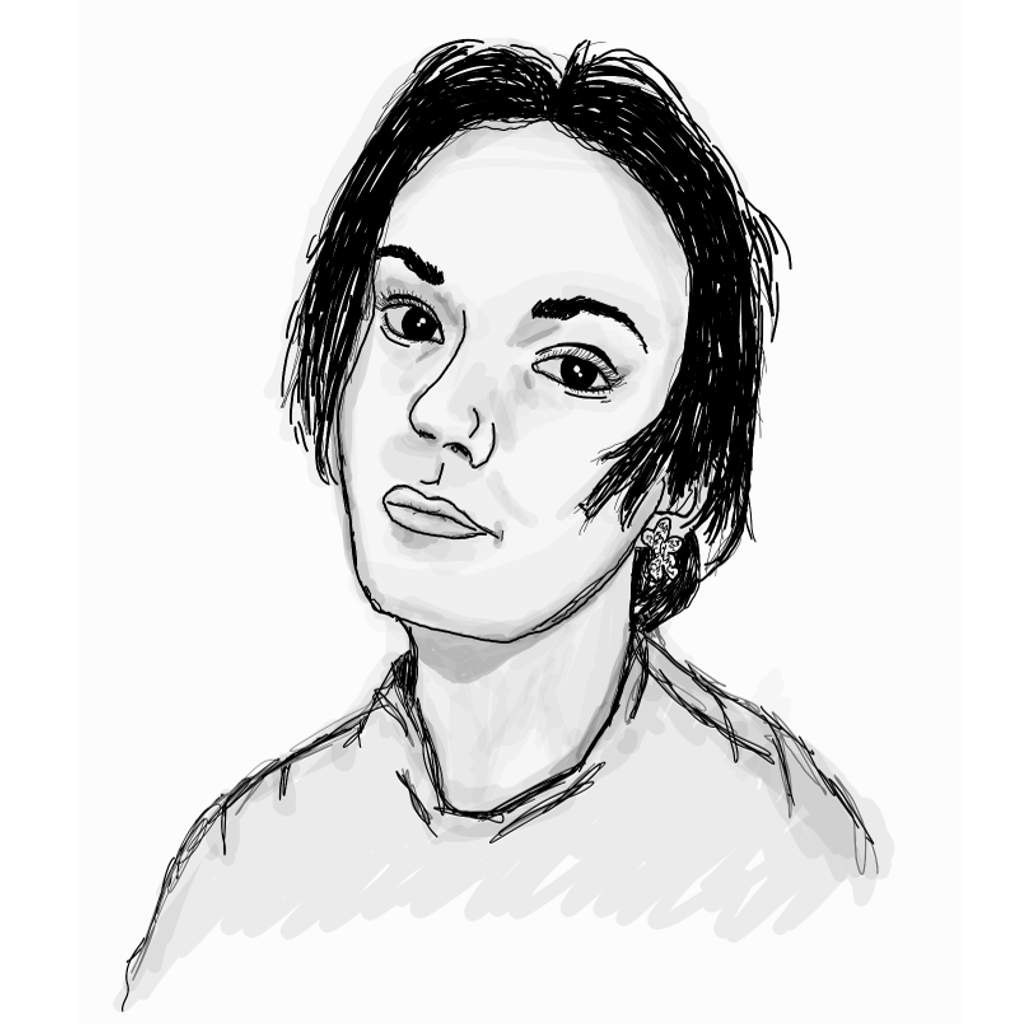
Rebecca Burger (she/her) is an MA student of ‘Literature Today’ at Utrecht University, following her BA in English Language and Culture. With her love for reading and analysing, her goal is to work in the publishing industry, preferably accompanied by a chai latte and a cat on her lap. She is the epitome of a mood reader and likes to delve into her books, like she delves into her work.
 RevUU
RevUU 