

A REVIEW by IRIS BOSMA
Melissa felt angry. She felt so angry she couldn’t speak. Her whole body angry, like the colour white. When Melissa’s mother died, Ruthie had not come to her
How could time keep passing like this? Become August. And all the things, every thing that had happened, the last time they had spoken, every tiny thing and the tiny days and tiny weeks keep passing and passing
How could time separate them like this?
Rage lies at the centre of There Are More Things. Rage against the world. Rage fuelled by emotion and loss, but also by a world plagued by injustice and corrupt politics.
This rage, however, also translates into something beautiful. It brings people together. It motivates, and it creates. Take the activist group that Melissa and Catarina join, for example. They fight together:
We are women and gender non-conforming people
Fighting for liberation and planetary justice
For centuries
Hetero patriarchal capitalist imperialists have ruled over the people
Using violence to dominate, exploit, and extract from the people and the land
But
We are many
We fight together: alongside our sisters, our siblings
And our ancestors
By any means necessary
The chanting ends with shouting the names of the deceased. It is powerful and sad. It describes the tone of the novel. In the foreword, Fowler asks the reader to read out loud when the characters are reading from the iPhones in the meetings – and this is what she means. Fowler wants the reader to feel and experience the same things that the characters do. The same rage.
Yara Rodrigues Fowler is a British-Brazilian author and activist who grew up in South London, England. So far, she has published two novels: Stubborn Archivist (2019) and There Are More Things (2022). Both novels are highly experimental and heavily influenced by political themes and identity through language. The novels, while written in English, contain passages in Portuguese that have an alienating effect on the Anglophone reader.
There Are More Things makes even heavier use of switching languages than Stubborn Archivist. Although the book is published in English, not all passages are written as such. The book makes heavy use of code-switching and at times presents the reader with passages written entirely in Portuguese. Sometimes a translation is immediately provided. Sometimes a translation is provided later down the line, such as a few pages or a few chapters later. Sometimes no translation is provided. As an anglophone reader, I felt distanced from the novel when the characters were speaking Portuguese rather than English, or if an English translation of a section is not immediately provided. This ties back in with some of the core themes of There Are More Things: language and identity. On her website, Fowler says she “write[s] untranslatable women.” This is quite literally reflected in the untranslated parts of the prose.
The novel follows various narratives, but mostly revolves around two young women: Catarina, born to a political family in Brazil, and Melissa, born in South London but with Brazilian roots. They become flatmates, and ultimately become close friends, too. Throughout the novel, both the ‘present’ and the character’s pasts get focussed on. Each of the eight parts of the novel is signified with a time and place, such as “Mile End 1 (2016),” “Amen Corner (1993-2011),” and so on. Each part or chapter serves a goal: shedding light on a characters’ past, such as telling how Catarina and Melissa both grew up or telling the story of Catarina’s revolutionary aunt. These parts can be confusing at times, as it might take a while for the reader to contextualise them, but ultimately, they serve to make the different storylines easier to follow. Eventually the fragments all fall into place, and the reader is left with a rich narrative that explores many different sides of the same story.
Aside from the fragmented structure, the novel is unique in the use of language, too. The style of the narration is short, abrupt and descriptive. Sometimes this can become repetitive. However, other times the descriptive language indicates that there are things left unsaid, which are up for the reader to interpret. The seemingly ‘incomplete’ text implies that there is more to the story than what is actually being told. It leaves room for speculation, and it allows the reader to imagine precisely what is not being said. For example, after one of their activist meetings,
…Catarina asked Melissa what they had talked about in the ACTION working group.
Hacking the Home Office Computers
Catarina looked at Melissa.
Leaving words unsaid is a powerful writing tool. In this quote, Catarina does not respond verbally to Melissa. But by describing that she “looked at Melissa,” Fowler effectively implies that there is something Catarina is not saying to Melissa, her opinion, and it is up to the reader to decide what this is. However, the writing style of There Are More Things can be frustrating at times, too. Take the quote above. In this case, despite the lack of quotation marks, it is clear that Melissa is answering Catarina’s question. But in other parts of the book this is not always as clear. It doesn’t always matter – and perhaps that is the point. Just like many other frustrations that the book evokes, like the switching between languages. Aside from the lack of quotation marks, the use of punctuation is also not a requirement for Fowler. In an interview, she explains that she grew up on MSN, and sometimes leaving a line without punctuation marks “just makes sense.” While unconventional, this style allows for poetic prose, switching between seemingly ‘normal’ prose and parts that read like poetry:
This was a beginning –
We saw from the window
We saw from the door
Where the net curtain was blowing
In the purple sky
Evoking frustration is perhaps one of the more interesting things that the novel does. Author Yara Rodrigues Fowler said in an interview with The Guardian that she wanted to see how she could agitate the reader, and how she could make the reader believe in revolution.
It is safe to say that with this novel, Fowler succeeded in both agitating me as a reader and in making me believe in standing up for what I believe in.
ABOUT THE AUTHOR
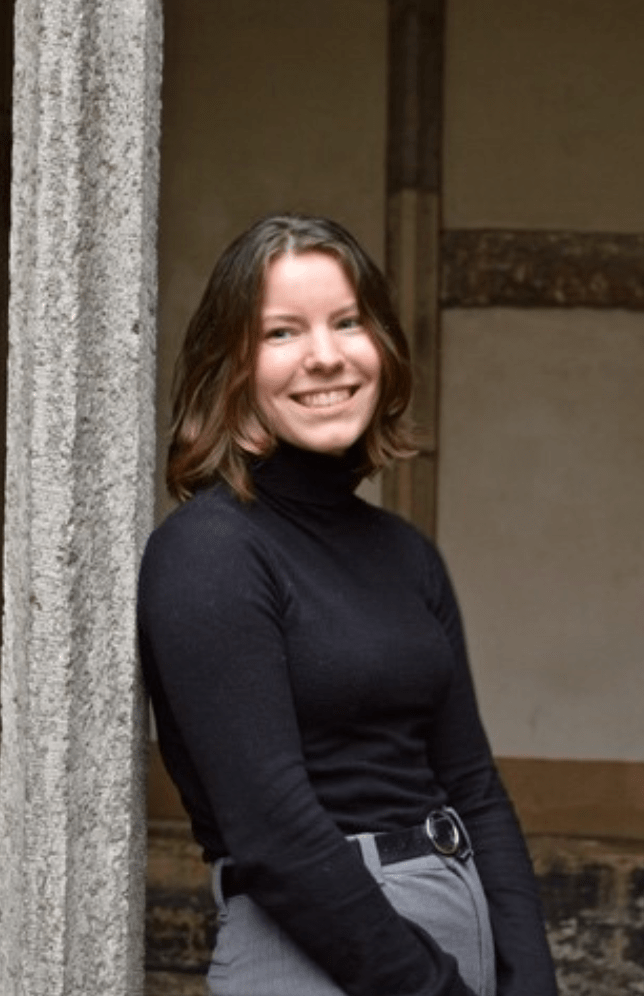
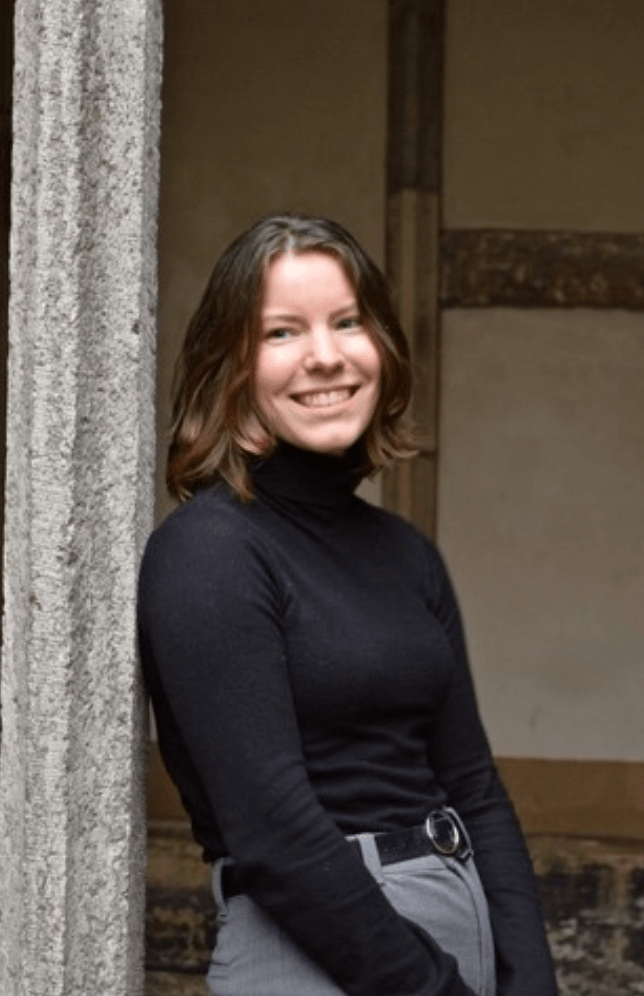
Iris Bosma is an enthusiastic writer and critic of literature. She is currently a student at Utrecht University, following the MA program Literature Today. She has a background in translation, but her passion lies in creating new narratives and creative content. She is active in the The Carried Away team, a literary community and digital indie publishing press. Her first creative work was published by Things That Talk for the project Orange The World.
 RevUU
RevUU 