
A BOOK CLUB review by LIVA PUKA
Part romp antihero thriller, part quick-witted expose, R. F. Kuang’s Yellowface promised me a key to a hidden garden, brimming with the industry’s dirty secrets. As I turn the lock, and let my morbid curiosity – tidal in its pull – draw me inside, where on earth will I wind up?
June Hayward and Athena Liu are frenemies. Both are Yale University alumni, both ambitious writers, both relocated to the same city, yet they could not be more different. Where Athena, the Chinese American literary prodigy, reaps the benefits of a successful writing career, June is still a nobody, struggling to get her name out there, bogged down by the publishing industry that has no interest in another white girl’s story. But June’s luck is about to change. After witnessing Athena die, strangely enough, by choking on a pancake, June makes a rash decision to steal Athena’s unpublished manuscript. As June rises to stardom by publishing Athena’s manuscript as her own and posing under an ethnically ambiguous alias, she spins a web of lies that is bound to come back to haunt her.
Yellowface is not the first novel by R. F. Kuang that has come to my notice. With titles such as The Poppy War and Babel to her name, Kuang has earned praise and recognition on both high-brow and popular literary review platforms. Undoubtedly, Kuang’s compelling writing style and thought-provoking themes resonate with a wide audience, but it is also the writer’s age that has taken the reading community by storm. Kuang became a published author at the age of 21, and has since released 5 books in the span of 5 years.
Kuang’s first venture into literary fiction, Yellowface, is her newest and shortest book to date. In a Barnes & Noble interview, Kuang defined her novel as a “ridiculous, absurdist satire” about the publishing industry and a “psychological thriller at heart”. As told by Kuang, the pandemic and Black Lives Matter movement in 2020 prompted a surge of attention to police brutality and racial prejudice. The profound impact of the movement reached various creative industries as well, including the publishing industry, where more and more marginalized voices were brought to the fore. This breakthrough propelled the story of Yellowface and its ever-growing necessity to be told at once. She jokingly calls Yellowface her “gremlin-mode pandemic novel,” as a testament to her frustration, anger, and loneliness.
Yellowface swings into full motion right off the bat. Athena dies, June steals her manuscript – a gut-wrenching retrospective of the role of Chinese laborers in World War One – does further research for it, edits it, and decides to claim all the credit. The novel then gets picked up by a major publishing house. 35 pages in, it quickly becomes clear, if not already given away by the text on the back cover, Yellowface is about to open many cans of worms: cultural appropriation, implicit racism, diversity, authorship, and representation in the publishing industry.
The plethora of negative effects of cancel culture and the built-up toxicity of the creative industries are all embodied in the character of June. Yellowface sets the record straight: June is not there to please me. And, well, that got me thrilled. As far as unlikable, unreliable characters go, June is marvelously written, her convoluted rationale unwavering. Fiction writer Julia Amante observes in her article on unreliable characters: “They seem completely logical and correct in their own mind.” This might just be the essence of why unlikable protagonist stories are so vivid. Yellowface is no different; living in June’s head possessed me to turn page after page, at the edge of my seat, curious to discover what trouble lurks around the corner.
From very early on, the story hints that June can and will act in ways that are morally questionable at best and flat-out wicked at worst. She is driven by her right to be admired, read and treated with respect, even though she does not intend to reciprocate it to her peers, the people in her industry, or her readers. June lies to Athena’s mother, persuading her not to donate her late daughter’s notebooks to an archive, expressing how “donating them would be a violation”. After catching a student talk behind June’s back, she publicly humiliates her. She causes a ruckus after receiving a one-star rating on Goodreads from Candace, her editorial assistant, basking in her vindication as she thinks: “And though I would never say this out loud about a fellow woman—the industry is tough enough as it is—I hope I got that bitch fired.”
Despite her extensive research on Chinese laborers, her perspective on Asian people remains frustratingly narrow, bound by stereotypes. Upon meeting an events coordinator at the Chinese American Social Club, June compares her to “Kim Jong Un’s girlboss, propagandist sister”. When shown hospitality and invited to a meal of Chinese food, she describes it as “greasy”, as she “tr[ies] not to gag”. June blackmails, deceives, twists the truth, gets defensive, all just to publicly wash her hands of it on social media. June is a born writer: she writes her own story, building it up as if it’s a piece of fiction, shaped out and manipulated to her liking.
Throughout the novel, June’s internal monologue recycles her working theory: “Publishing picks a winner—someone attractive enough, someone cool and young and, oh, we’re all thinking it, let’s just say it, ‘diverse’ enough—and lavishes all its money and resources on them.” Her steadfast righteousness is somewhat fascinating, but more so it puts great emphasis on her victimhood, her inability to change, to break out of her stubbornness, to drop the act. Working my way through the book, I could not shake the feeling that at any moment the lies will catch up with June, that the stakes would become steeper and steeper and at any second, she will have to pay. Yet no matter how many unforeseen obstacles emerge in her way, June manages to worm herself out of everything.
Living through June’s story, which got crazier by the page, I circled back to one question: does June have any redeeming qualities? Satirical in nature, June and her world are meant to be exaggerated, her reactions blown out of proportion. Margaret Tally defined an anti-heroine as a “deeply flawed, yet at the same time, sympathetic character.” Some might argue that an unlikable character is not defined by their surface-level negative traits, but by those that can be found somewhere in between the lines – where there is an intention, there is a justification. June struggles on the redeeming quality front; my sympathy for June was awoken only when we learn about her sexual assault in college and, perhaps more significantly, Athena publishing a story about it without her consent. Athena exploiting June’s suffering appears to be the turning point for June; it ignited her restless anger toward Athena, leading her to perceive Athena as a thief and planting in her the idea of a tit-for-tat mentality.
Yellowface aims to be a social commentary. Witty, sharp, and cutting, unafraid to poke at fellow writers and readers, unapologetic about its metafictional layers. The synopsis promises us insights into the cut-throat literary field, which has been riveting enough to get picked up by many who are interested in literature and publishing. I was no exception. Nevertheless, the search for its main takeaway left me puzzled. The theatrics of June’s personal life outshine the unjust workings of the publishing industry. If anything, the story felt like an in-depth look into June’s jealousy and insecurity, triggered time and time again by internet sleuths, doubtful readers, critical peers, and Athena’s alleged “ghost” that starts tormenting June on social media. Her outrageous actions become grander than the social commentary the story intends to tell. It seems that the larger questions posed at the beginning become fragmented and diluted, stored away, as June’s microaggressions take center stage.
Interestingly enough, the rivalry between these two ambitious writers proves to be way more multi-faceted than I initially expected. With nuance, Kuang situates Athena and June on opposite sides of the spectrum in more ways than one. Alongside race, June and Athena have class differences. While Athena “went from Yale to a fully funded master’s degree to hundreds of thousands of dollars in her bank account”, June grappled with her fate as a struggling artist. Yellowface has all the components to make room for a well-observed and clever segue into socio-economic intersectionality, and the financial privilege that gives many up-and-comers a leg up the publishing industry. In spite of that, Yellowface still zeroes in June as a white woman scorned, with a mind and behavior skewed by prejudice, insecurity, and envy.
Yellowface’s relevance to today’s issues has worked out in Kuang’s favor, since it doesn’t cease to spark debate among its readers. What is clear is that reading Yellowface has kindled enough ambivalence and intrigue in me to know my journey with Kuang has only just started.
ABOUT THE AUTHOR
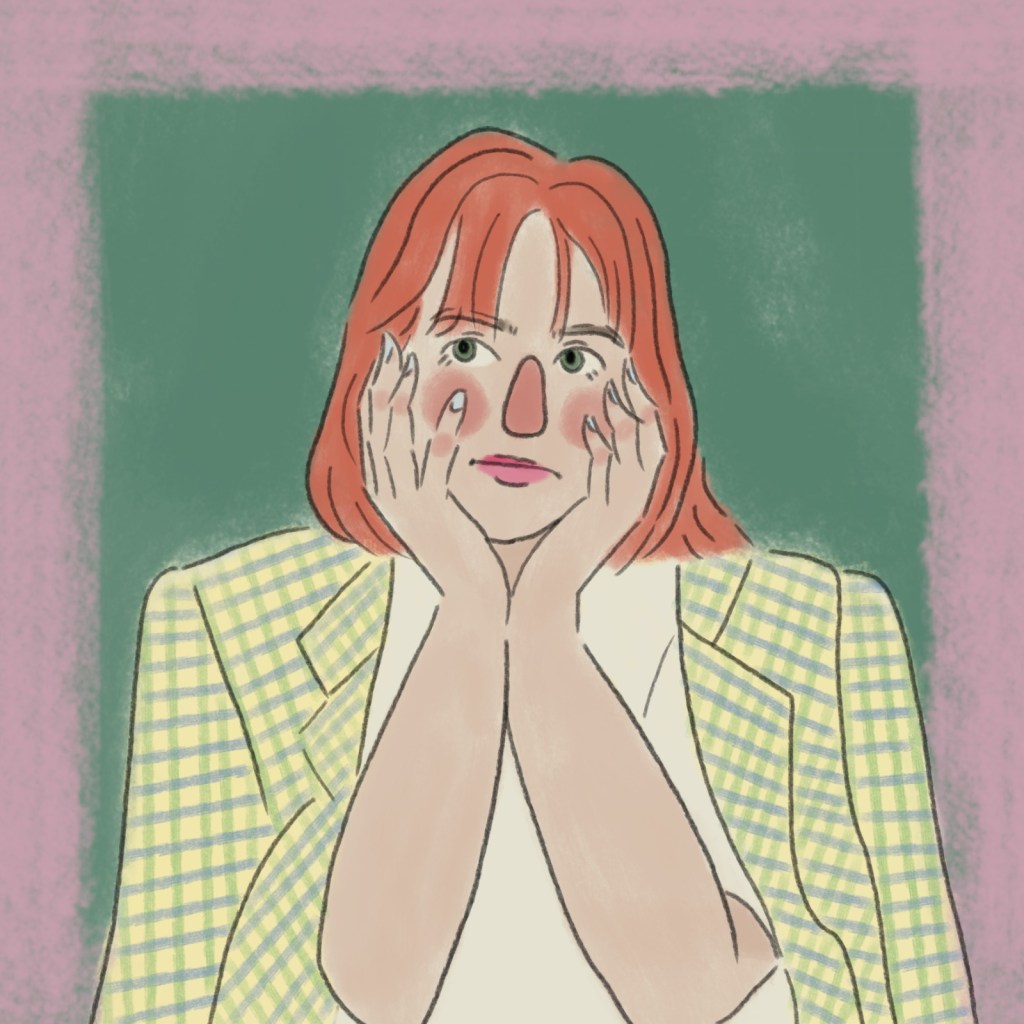
Liva Puka is a junior content writer and copywriter, currently enrolled in the MA ‘Literature Today’ program at Utrecht University. With a passion for cultural development, anthropology, and ecocriticism, she strives to develop meaningful connections with her audience. Outside professional and academic ventures, Liva finds great joy in birdwatching, which has opened her eyes to the many wonders of the world surrounding us.
 RevUU
RevUU 