


A critical review by merit wissink
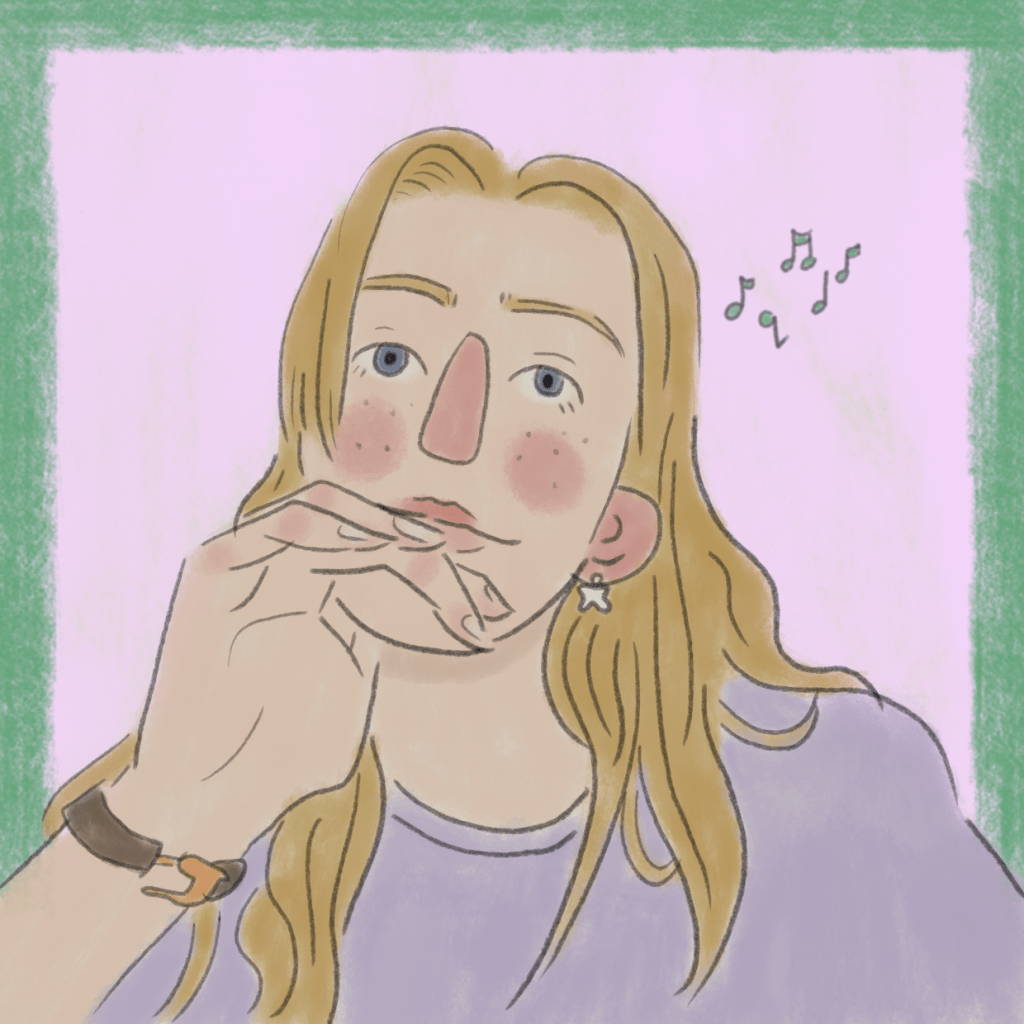
When was your First Time? For me, it was when I was still in primary school and heard the song “What Makes You Beautiful” on the radio, the first single by what would later become the most famous boy band of the early 2010s: One Direction. From that moment on, I was a Directioner (a die-hard One Direction fan). Everything in my life revolved around one thing and one thing only: this band. I had posters, wristbands, necklaces, t-shirts, I bought all their albums, saw their films, and went to their concerts. Whenever the phrase ‘one direction’ showed up in schoolbooks and assignments, I would underline it and draw hearts around it. I stayed up until deep in the night to watch their live streams and videoclips. They gave my life a sense purpose, and they made me happy.
When I first read about Y/N by Esther Yi, the premise immediately intrigued me. Girl falls in love with K-pop star and travels the world in a quest to find him. As I’ve shamelessly divulged, this love and devotion for a popstar is something I could relate to. So, I picked it up, ready to be sucked into a wonderful and surreal story about fan culture.
Y/N follows an unnamed Korean American narrator living in Berlin. She works an unfulfilling job as a copywriter for a company selling canned artichoke hearts and has a boyfriend whom she introduces to everyone as her adoptive brother (ew!). She lives with her roommate, Vavra, a superfan of the popular K-pop group referred to as the “pack of boys”. The narrator, on the other hand, is anything but. She does not want anything to do with these Korean superstars. Everything changes, however, when Vavra drags her along to a concert. She is mesmerized by the looks and movements of the youngest member, Moon, and becomes obsessed with him in an experience that is described as her “First Time”.
At the same time, her relationship with her boyfriend, Masterson, is failing. He cannot commit to falling in love with the narrator and instead describes her as “the person [he is] currently considering being in love with.” Moon, however, is always there for the narrator. At the (misunderstood) advice of a therapist, she leaves for Seoul in search of Moon. What follows is a story of delusion, identity, and loneliness in the modern age.
Through Y/N, Yi explores the wild world of fan culture and the extremes of idolization in a way that feels timely and relevant. As Masterson cleverly observes, boy bands such as the “pack of boys” now function as gods. “We no longer go to church once a week,” he says. Instead, “we attend a stadium concert once a year.” Yi, moreover, uses Y/N to explore the realm of parasocial relationships. Parasocial relationships, where one party is interested in the other and the other is not aware of the person’s existence, are prominent in an age of fan culture’s accelerating online presence. The narrator’s imaginary relationship with Moon seems to give her more satisfaction than the real-life relationship she has with Masterson. “He feeds my imagination more than you do,” she says to Masterson, who replies, “Of course he does, […] Because he exists in your imagination.”
The ways in which the characters talk is dream-like, and the novel gets progressively more surreal as it continues. Yi’s prose is highly literary, dripping in adjectives and synonyms, which, although impressive, often borders on pretentious. Whilst reading, one gets the impression that Yi robbed a thesaurus of its entire vocabulary to write this novel. The words and sentence structures can be unnecessarily complicated, which sometimes makes it difficult to get into the narrative. An example of this absurd style can be seen here, in a scene after the narrator sees Moon for the first time:
For a single moment in time, I would be all that he saw. I knew I’d be condemned for imposing on him my individual humanity, divorced from the crowd, but I didn’t care, I was a person, I knew this if nothing else, that I was a person, however hapless, however void.
Similarly, the following passage, where she describes how she wants to be noticed by Moon, exemplifies Yi’s beautiful yet bizarre language:
I couldn’t follow along, as my arms were crossed in order to thwart any flare-ups of agency that might disturb my state of perfect passivity, which I needed to maintain so that Moon could act upon me as much as possible.
Well, my agency wants to flare up in a cringe. I can see that this use of language is deliberate, as it adds to the surrealism at play in the novel. However, it is overdone, especially considering the fact that all characters, however major or minor, use language in the exact same manner. We never get to know any of the character’s personalities, as they all sound the same. They all speak Yi’s language.
The poetic, dreamy prose is regularly interchanged with the narrator’s own fanfiction, a type of fiction, written by fans (often amateur writers), based on popular characters or on real-life figures. The title “Y/N” refers to “your/name”, a narrative device used in a particular type of fanfiction which allows readers to insert their own name into the story. While innovative, Yi’s addition of fanfiction is also immediately where some of my problems with the novel arise. The fanfiction follows Y/N and her relationship with Moon, and while it is not strictly autobiographical, the storylines between the narrator’s life and her character’s often strike an uncanny resemblance. The character our narrator creates seems to be an exact copy of herself, sharing all her physical and personality traits. Moreover, the narrator’s writing style is identical to Yi’s, making them hard to distinguish. I found myself wondering whether I had missed the switch from fanfiction to ‘real life’ several times.
Moreover, one of the fans the narrator meets appropriately notes that, “[i]n order to accommodate the biography of every reader that might chance upon the story, the writer creates a character void of personality.” Ironically, the Y/N character that the narrator creates in the novel is very particular and has lots of imperfections and quirks that make her hard to relate to or see yourself in. This makes it seem as though the title of the novel, as well as element of fanfiction, were only employed to lure in a specific reading public: that of so-called fangirls, the die-hard (often female) fans that are known to go to great lengths to engage with their idol.
You see, Yi comes from a background in academic and non-fiction essay writing. Y/N is in that sense her first exploration into the world of fiction writing. In an interview with the podcast “Reading the Room”, she notes that she is not a K-pop fan herself. Her obsession is with literature and great writers.
Here comes the part when things Yi seems to be wanting bridge the two worlds, to create a middle ground between the higher culture of literary fiction and the lower culture of fandom. Although she does take the initial steps to explore the (so far) unexplored literary world of celebrity fandom, I get the feeling that she tries too hard to make fan culture literary and, consequently, seems to forget the yearning and the passion that lie at the heart of the story. The yearning and the passion that made me consume everything One Direction created.
In that same interview with “Reading the Room”, Yi notes that Y/N is essentially just a simple story of girl meets boy and falls in love. However, by changing the context to one of fan culture and idolization, Yi is able to give it a contemporary, critical, twist.
Y/N provides a modern exploration into the themes of loneliness and identity. The narrator struggles with intense feelings of solitude. She has trouble finding human connection and purposefully distances herself from any form of community. In contrast to other fans of Moon, she does not experience any sexual feelings towards Moon, nor does she really want to meet him. Rather: “[She] want[s] to have known him for years and years.” Other fans, she perceives as being stalkers or just utterly disturbing – she meets one fan who wants to domesticate Moon like a dog. At the same time, her identity as a Korean American woman living in Germany, and subsequently South Korea, makes for a complicated relationship with her identity. This becomes especially apparent when she moves to Seoul, and everyone calls her out for her American pronunciation of the Korean language. She does not seem to fit into any society. Instead, she finds comfort and company in her idea of Moon. Y/N thus reads as an inquiry into fandom as a way to fill the void, as a cure for loneliness. Moon, or rather her idea of Moon, gives her the company she longs for, and that she struggled to find with her (ex-)boyfriend and friends. Through fanfiction, the narrator is able to inhabit an imaginary character, an ideal character that she longs to be.
Looking at it this way, Y/N is essentially a novel about longing – about longing for love, longing for companionship, longing for a superstar, longing for the unattainable, and about longing to be someone you are not. But most of all about how, perhaps, the best fantasies are those which are never realised. Longing might be the goal all along.
Nonetheless, one cannot refrain from interpreting the novel as a cautionary tale about idolization and the development of parasocial relationships, as well. When our narrator eventually meets Moon, her dream crumbles as she understands that Moon cannot be who she wants him to be. In response to Moon not reciprocating her affection, she realizes:
I might as well have been speaking with a well-meaning relative. Here Moon was, setting before me ideas of indisputable rationality, like utensils arranged in order, polished and practical, when he was supposed to be coaxing my imagination into its deepest contortions.
Overall, Esther Yi presents us with a unique and interesting debut. She makes an attempt, though half-hearted, to explore the (so far) mostly unexplored literary world of celebrity fascination and obsession. In the end, my problem with Yi’s novel is that I do not think it went far enough. Yi had the potential, and even set up the story initially, to really explore the longing and the yearning that comes with idolization, the longing and the yearning that I know and have experienced, but her desire to intellectualize fandom made it ultimately fall flat. I found myself wishing for more: more delusion, more obsession, and more passion. For an even deeper exploration into fan culture and society’s obsession with celebrities. I wanted to be able to see my own obsessive tendencies in the character, to see a similar sense of yearning reflected in the narrator.

ABOUT THE AUTHOR
Merit Wissink is currently enrolled in the MA program ‘Literature Today’ at Utrecht University. She completed her BA studies at Groningen University with a degree in ‘European Languages and Cultures’, specializing in Swedish language and literature. In her free time, she likes to listen to and obsess over music, film, and all things pop culture and art related. Her research interests include gender and sexuality in literature and (pop) culture.
 RevUU
RevUU 