


A critical review by CAMILLE GUINÉE
Monsters. As children we lie in bed at night in fear that they should find us. As we grow up, we come to understand that the monsters we’ve been taught to fear — those furry, snot-nosed, ugly, and malevolently described creatures from our childhood tales —aren’t as easily pinpointed, or as different from us, as we once thought.
Far more chillingly, the real monsters of our world look, act, and speak like us. At one point they might have been just like us. What’s more concerning is that now, all grown up, these real-life monsters are capable of disguising themselves as us, or rather, as more exceptional versions of us. They share our creative talents and boundless potential, at times surpassing our abilities. Capable of crafting beautiful and profoundly compelling creations beyond our wildest imaginations. What separates them from us, however, is their gifts propensity to divert our attention from the truths of their character.
As adults, no longer shielded by the innocence of childhood, we are expected to know better, to be capable of distinguishing between right and wrong, between a monster and a genius. This becomes especially challenging when we find ourselves inexplicably drawn to the creations of individuals whose actions or beliefs are morally reprehensible. So, how do we navigate the complex terrain of appreciating the work of people who turn out to be monstrous? What do we do when the lines that once seemed so clear, turn out to be blurry?
How are we to stay away from the monsters, so as to not become monsters ourselves?
This is the question which now plagues our era of ‘cancel-culture’ – an era characterized by moral righteousness and self-congratulation when it comes to finding and distinguishing the monsters from the masses. A debate which, despite its portrayal as a fervent pursuit of justice, often descends into a contest of moral superiority rather than a genuine expression of care.
Claire Dederer’s newest book, Monsters: A Fan’s Dilemma, is a 13-chapter part-memoir, part-personal essay that tackles this exact dilemma: The actions of “monstrous” artists, whether we can separate their actions from the art they create, if we even should, and beyond that, what happens to us if we don’t.
One might ask, who is this author to presume she has the authority to guide us in addressing a matter as profound as this, one which weighs heavily on the thoughts and minds of an entire generation? To answer that question: Claire Dederer is author of the New York Times best seller Poser and the acclaimed memoir Love and Trouble. She is known for writing on an array of subjects in the form of personal essays and cultural commentary, for which she has been recognized and garnered great attention. Described in The New York Times Book Review as “an excellent writer who spins her prose with the casual grace and easy humor of a seasoned professional”.
This seems to be the perfect answer: exemplifying that she is established, that she is trustworthy. The truth of the matter, however, is that Dederer is a white middle-class woman — a feminist, a writer, a mother, someone who used to be a teenage girl, who has been preyed upon by older men, assaulted on the street, grabbed, coerced, and escaped rape. In our day and age she is, unfortunately, “non-special”. She, like all of us, only has her personal take. She does not claim to offer any more or any less than this.
With this in mind, why not her?
Where any author might seize the chance to promote their foolproof approach to addressing such a complex subject, providing an unequivocal solution to all their readers’ struggles, Dederer has taken a markedly different approach. She steadfastly avoids positioning herself as an impartial observer and rejects the concept of authoritative criticism. Instead, she openly acknowledges the biases and subjectivities she brings to her exploration of the topic:
The tension between what I’ve been through as a woman and the fact that I want to experience the freedom and beauty and grandeur and strangeness of great art — this is at the heart of the matter. It’s not a philosophical query; it’s an emotional one.
The reason why all of Dederer’s ideas appear so well-defined and confident is because she wholeheartedly takes ownership of them. She refrains from assuming that her thoughts and feelings will align perfectly with those of her readers; she acknowledges both the diversity of their experiences, and the fact that her own have an effect on the way she tackles this subject. She also recognizes her own monstrousness. Facing the emotional conflict in her struggle to be both a good writer and a devoted mother, while also dealing with a history of functioning alcoholism. She acknowledges that there are parts of her own life resisting harmony.
Eventually, she brings us to the realization that the purpose of this book is not to furnish us with definitive answers or a step-by-step guide on how to navigate the topic. I won’t deny that I thought this would be the case, or rather, I hoped for it, so that I would know with certainty what was “right”. Alternatively, it offers something far more valuable, presenting us with multiple avenues for introspection. These pathways enable us to delve into our own conflicting emotions—the very emotions that led us to pick up the book in the first place—leading us to a deeper comprehension of why we feel the way we do. As we begin to grapple with the fact that “what Woody Allen did was very wrong” and come to understand that despite this, our “feelings come from someplace more elemental than thought”, we slowly begin to uncover the parts of us that may also be, at times, monstrous.
This declaration that Dederer is not an objective expert on the matter, is in turn what actually allows us to let down our guard. As soon as I knew all of these thoughts and explorations were a reflection of her own experiences rather than an assumption of mine, it became much easier to digest. Then additionally realizing I resonated with some of her experiences, felt less like Dederer was exposing me or calling me out for my conflicting emotions. Instead, feeling more like a moment of solidarity, of shared understanding that, yes, these issues are very complicated, our emotions are very complicated, I am not alone in this and neither are you.
But how did this all come about?
On 20 November 2017, Dederer published an essay in The Paris Review titled What Do We Do with the Art of Monstrous Men? In her essay, she grappled with the dilemma of enjoying and appreciating the creative works of artists who committed horrible acts. Reciting and reflecting on her personal engagement with the works of men like Roman Polanski, Woody Allen, V. S. Naipaul, and too many more to mention. This would become, as Dederer intended it to be, the first chapter of her book Monsters.
This topic has hung in the collective air like a heavy mist. Almost every day a new idol is outed for not being what they claimed to be, and their audience is left with the responsibility of deciding what to do with everything they created. I will stop saying ‘we’ and ‘us’ in this moment because I stand behind the sentiment expressed by Dederer: we hide behind a collective, for fear of taking ownership and exposing our own complicated feelings. Every time a situation of this nature unfolds, an anxiousness is evoked in me. This person is ‘cancelled’ but, but the work. What do I do with the work? What do I do with the way it made me feel? With everything it gave me? An inner battle ensues.
Dederer tackles this battle head-on; she passionately articulates and expresses her own thought process in addressing the complicated confrontation between consumer, artist and art. In doing so, she allows me to tackle my own.
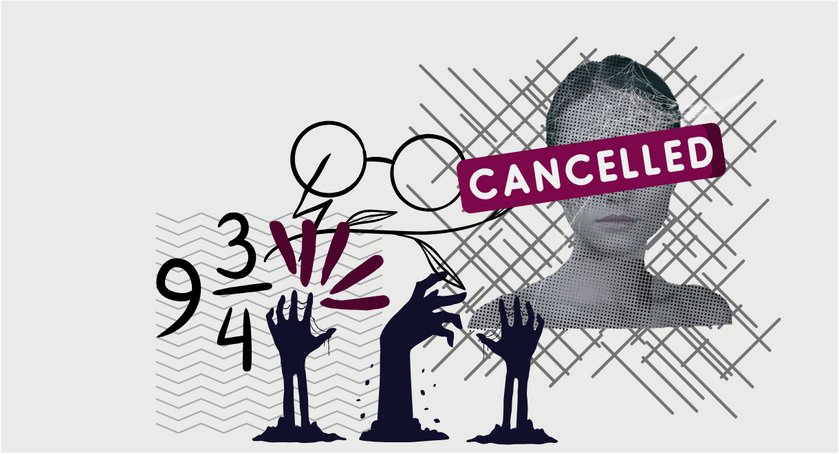
One complicated example pointed out by Dederer is that of the Harry Potter series, and more specifically, of its author J.K. Rowling.
Once more, into the fray we go.
Do I enjoy the magical wizarding world of Harry Potter? In all honesty, I do, I won’t deny that fond memories of my childhood are attached to the discovery of this series. I had a comradery with a community that shared a fondness for magic, and a soft spot for a story in which good triumphed over evil. Nonetheless, do I have a visceral negative reaction to the reality of J.K. Rowling’s comments with regards to the trans community? It genuinely disturbs me to even contemplate them. Both sentiments can coexist, as W.H. Auden aptly expresses, and as Derderer references: “the desires of the heart are as crooked as corkscrews”. Dederer adds,
Our emotions, collapsed together with those of the artists we love, leave us vulnerable in ways that are entirely new in the Internet era. No wonder we don’t know how to behave in this new landscape, or even how to feel.
How can someone who championed uniqueness, emphasizing inclusion in place of division, in the childhood books of so many, be so openly opposed to an entire real community which stands for a celebration of that above all? This “stain” as Dederer likes to call it, represents a betrayal — a betrayal to a community that, in years past, found solace in her books, felt understood, accepted. They created a relationship (albeit para-social) with someone they thought they knew, someone they believed knew them. What results is a deep cut and a harsh awakening.
And yet “even after everything”, as Dederer so simply puts, why do I still have so much love for the story, the plot, the characters, the magic beneath it all? I believe that I know what is right, and I know what is wrong. Why can I not let go? And what do I do with the art?
The impulse to obliterate and reprimand anything and everything created by Rowling is powerful, overwhelming. But as Dederer is quick to point out, does our decision to enjoy or hate something actually change anything? Is the idea that we might be able to make a difference by creating a bonfire of all the Harry Potter books ridiculous? Will it change any of the damage that has already been done? Will it change the fact that, after knowing all of this, I can’t help but cherish the art? Is this simply the “plight of the audience member”?
Perhaps the fact of the matter is not to change this, but to simply recognize that:
Love is not reliant on judgment, but on a decision to set judgment aside. Love is anarchy. Love is chaos. We don’t love the deserving we love flawed and imperfect human beings, in an emotional logic that belongs to an entirely different weather system than the chilly climate of reason.
This “love” is not a cop out to absolve us or the artist of any responsibility for their actions, for the pain they have caused. No. I think the ultimate point is that this has little to do with them and much to do with how we go on in a world where someone like them, someone so monstrous, created something so cherished.
In a society captivated by the genius of artists who have committed unthinkable deeds, Dederer invites readers to embark on a journey that challenges preconceived notions, blurs moral boundaries, and reevaluates the intricate relationship between an artist’s persona, their body of work, and the position of the consumer, caught in the web between.
Above all, Dederer’s exploration unveils profound ambiguities—hidden truths that force us to confront uncomfortable aspects of ourselves and the way we operate. Her exploration of her own confusing, conflicted and complicated thoughts has given us the opportunity to find, to not shy away from, our own.
ABOUT THE AUTHOR
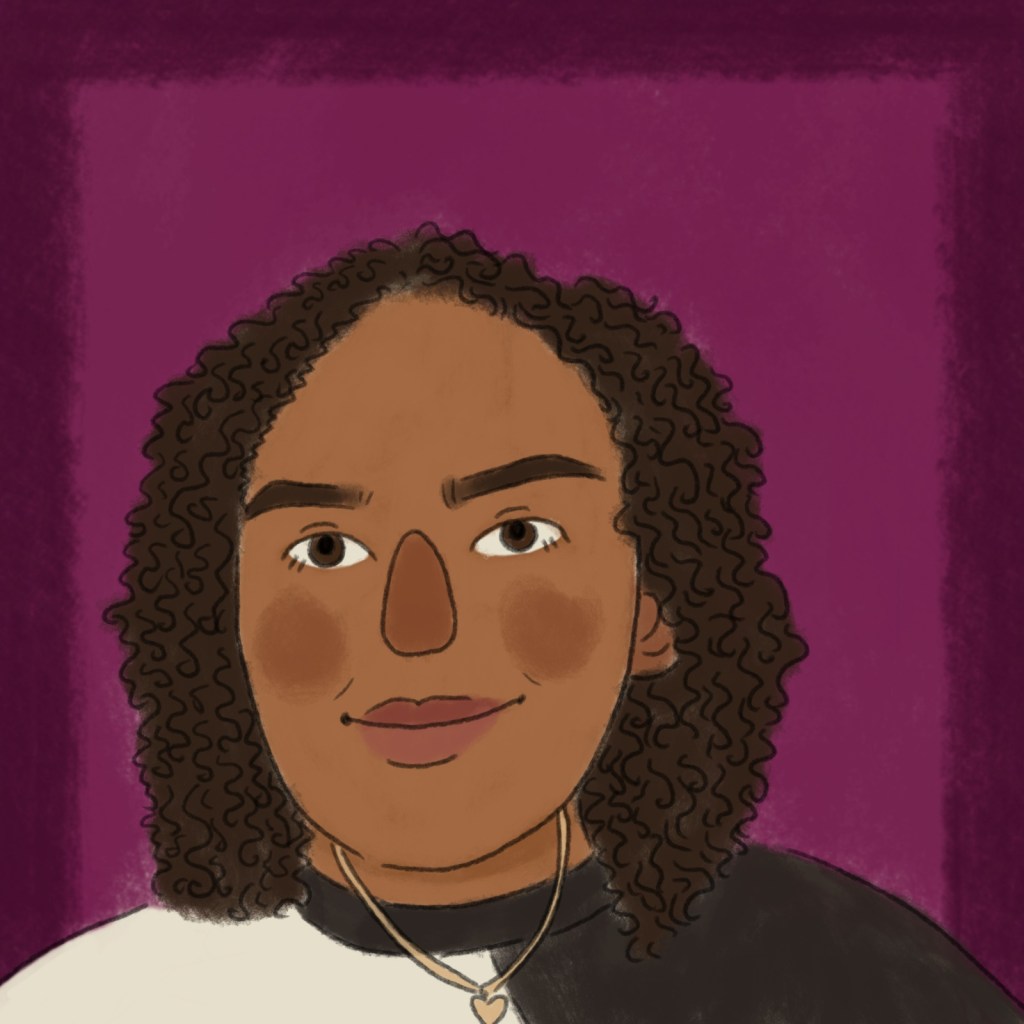
Camille Guinée, currently a student at Utrecht University pursuing the MA ‘Literature Today’, maintains a profound fascination with how literature mirrors historical context, particularly in reference to postcolonial texts. Furthermore, she is deeply intrigued by how literature has evolved into a platform for exploring contemporary issues that occupy the minds of people today and continues to serve as a medium by which change is inspired. With an inquisitive spirit and a dedication to the written word, she is adamant about making her mark in the literary landscape.
 RevUU
RevUU 